
Potential analysis for effective leadership development: Identifying and specifically promoting future skills

How can leadership development truly be effective? Learn why a thorough potential analysis is key to identifying individual strengths and areas for development, deriving appropriate measures, and specifically promoting future skills.
The Competence Compass: Truly recognizing competencies instead of just assuming them

What lies behind the frequently sought-after skills that play a key role in personnel selection, and how can I meaningfully assess them? The answer is rarely apparent at first glance. A confident demeanor is not proof of leadership skills. Friendliness says little about how someone handles differing opinions within a team. And someone who has a quick answer doesn't automatically solve problems in a particularly structured way.
At INFO GmbH, we have developed a competence compass for all job-relevant and future-oriented skills, characteristics and motives, which addresses such questions and precisely defines what is important for the respective area – based on scientific findings and practical experience.
AI in education: Getting started is not rocket science„

AI in education offers great opportunities – but how can one get started safely and effectively? Psychologist (B.Sc.) Peer Allendörfer, who advises companies on process optimization, provides practical answers.
Requirements analysis in aptitude diagnostics: the first step towards sound personnel selection

A sound personnel selection process doesn't begin with choosing a test, but with a thorough job analysis using aptitude diagnostics. Learn how a precise and scientifically sound selection process can be developed from the requirements of a position.
„Future Fit“ with the „Talent Life Cycle“
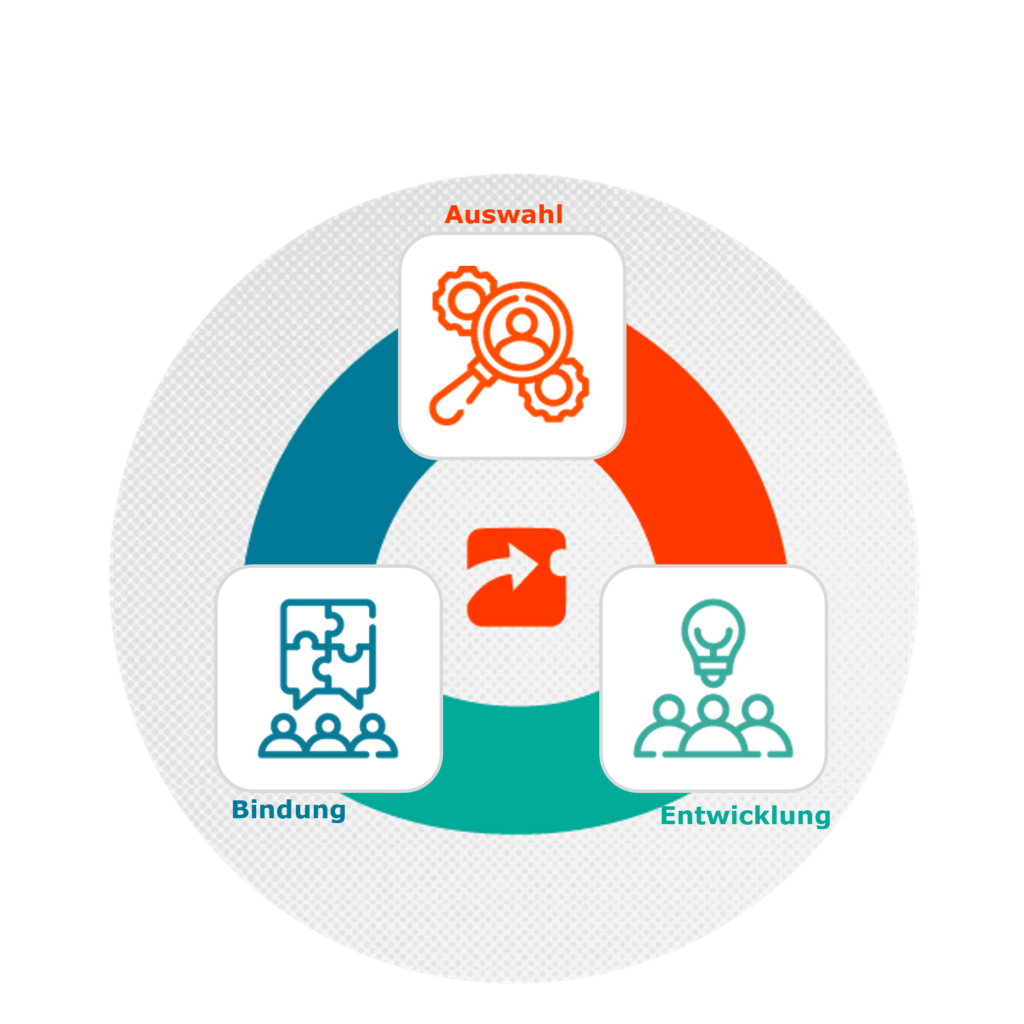
Human resources management in many companies currently feels like a juggling class on a treadmill: skills shortages, AI, new competency requirements, generational change, rising expectations for leadership and development – and on top of all that, everything is supposed to become faster, fairer, more digital, and more human. It's a challenging task.
But companies don't need to reinvent the wheel every time. What they primarily need is a clear view of the entire talent life cycle.
Because future-proof HR management doesn't begin with the job interview and doesn't end with the signing of the contract. It combines selection, onboarding, development, leadership, retention, and change into a continuous process.
Apprenticeship start in 2026: Three creative onboarding tips to strengthen trust, orientation and development

For young people, the first day of their apprenticeship is much more than just "Day 1." It's a kind of internal stress test. Their brain scans: Am I being taken seriously? Am I allowed to ask questions without embarrassing myself? And, most importantly: Do I have a place here? Three creative onboarding ideas show how trainers can strengthen the trust, orientation, and development of their apprentices right from the start.
Anti-counterfeiting measures in the age of AI: Strategies for meaningful aptitude diagnostics

Artificial intelligence is fundamentally changing application and selection processes. This article shows why professional aptitude diagnostics are becoming more important despite AI, what risks can arise from AI support, pre-formulated answers, or deepfakes, and what technical, organizational, and methodological measures can be taken to ensure that online aptitude tests remain meaningful and falsifiable.
Identifying Future Skills: How companies identify the competencies of the future

Future skills are becoming increasingly important in the modern workplace. Companies should not only assess current specialist knowledge, but above all, identify learning abilities, adaptability, and social skills early on. This article shows which future skills are crucial, how they can be made visible in recruitment, and why modern personnel development should focus more than ever on potential rather than just qualifications.
Using brains instead of gut feeling – aptitude diagnostics as a success factor in modern recruiting

This article demonstrates why aptitude diagnostics are becoming increasingly important in modern recruiting. It highlights the limitations of gut feeling in personnel decisions, explains typical perceptual errors, and shows how scientifically sound methods help companies select suitable talent objectively, sustainably, and with a future-oriented approach.
Conducting effective training discussions: Developing the potential of trainees using coaching methods

How can coaching methods make training discussions more effective? Read about how active listening, targeted questions, and the promotion of self-responsibility contribute to sustainably strengthening the motivation, willingness to learn, and potential of trainees.