

What are 10 tips and methods for making personnel selection and development future-proof?
Human resources work in many companies currently feels like a juggling class on a treadmill: skills shortages, AI, new competency requirements, generational change, rising expectations for leadership and development – and on top of all that, everything is supposed to become faster, fairer, more digital, and more human. It's a challenging task.
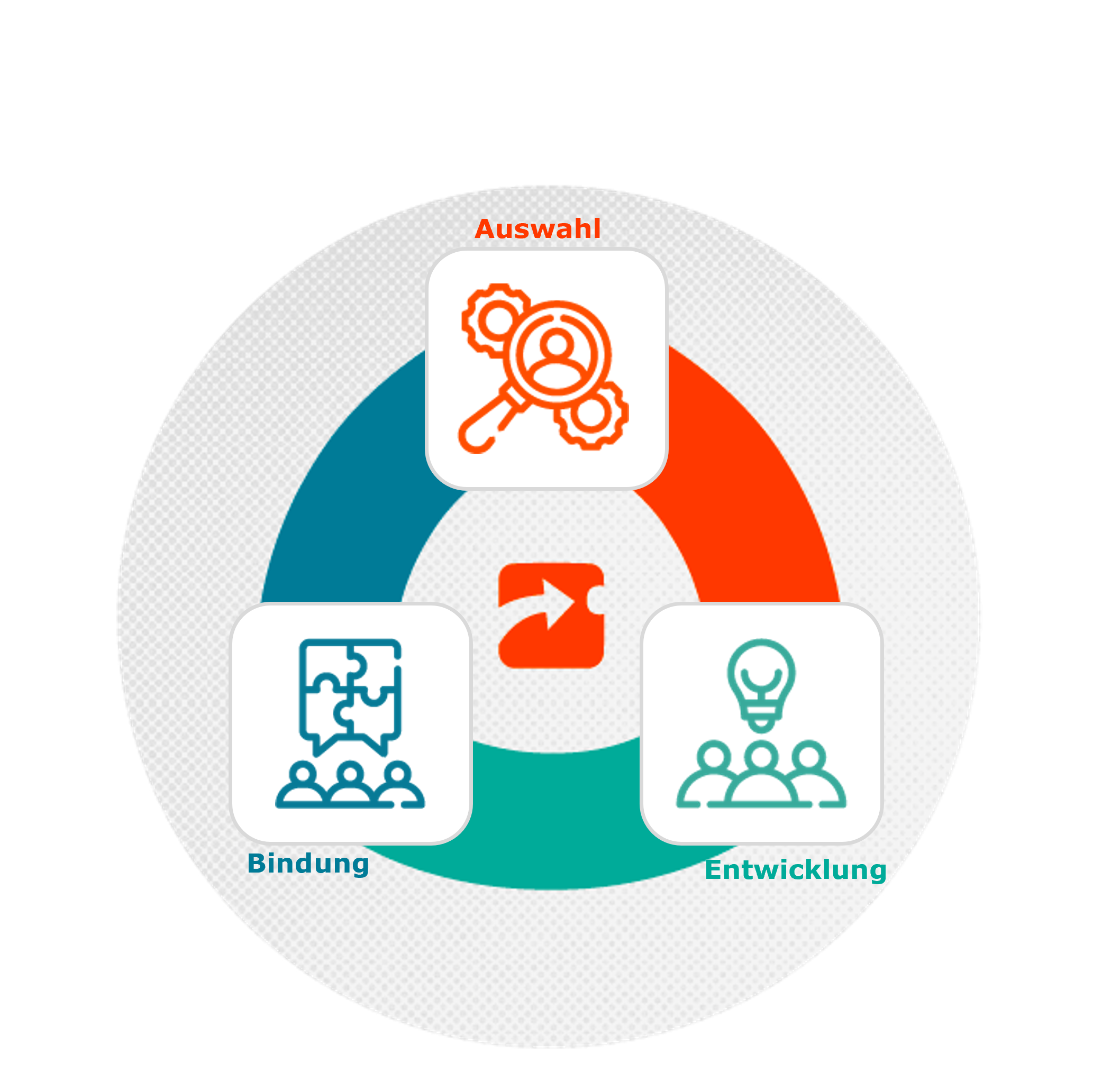
The good news is that companies don't have to reinvent the wheel every time. What they primarily need is a clear view of the entire talent life cycle – that is, the entire journey of a person within the company: from selecting suitable applicants and targeted skills development to continuous training and further education.
Because future-proof HR management doesn't begin with the job interview and doesn't end with the signing of the contract. It combines selection, onboarding, development, leadership, retention, and change into a continuous process.
Or to put it another way: Anyone who wants to attract, develop and retain talent should not only ask: "Who do we hire?" but also: "How do we ensure that the people in our organization enjoy being with us, remain healthy in the long term and contribute successfully to the company?"„
1. Requirements analysis: First, know who you are actually looking for.
The most important method of modern personnel selection sounds unspectacular at first: a thorough requirements analysis.
But this is often precisely where it's decided whether a selection process is truly successful and the right people are found for the right position – or whether, in the end, you're once again searching for the proverbial "jack-of-all-trades": resilient, open-minded, analytical, flexible, loyal, innovative, a team player, a strong leader, digitally savvy, and, of course, with 25 years of experience straight out of school. But all joking aside…
A good requirements analysis clarifies:
- Which tasks are truly critical to success?
- What skills does the person need today?
- What skills will be important tomorrow?
- What qualities should be present – and where can strategies, behaviors and knowledge be acquired (i.e., developed within the company over time)?
- Which personality traits and motives are suitable for the role?
- What organizational and workplace conditions does someone need to be successful?
This method is particularly crucial with regard to the "talent life cycle." Requirements are not only the basis for selection; they also form the basis for onboarding, development discussions, training, coaching, and career planning.
Working carefully here will save you a lot of work later. And probably also a few meetings titled: "We need to take a fundamental look at this again."„
2. Competency models: a translation for corporate goals
A competency model translates company goals into observable behavior. It makes visible which skills, attitudes, and behaviors are particularly important for specific roles or employee groups within the company.
This is crucial for future viability. Companies need not only specialist expertise, but also soft skills such as the ability to learn, self-organization, communication skills, a willingness to change, problem-solving skills, the ability to reflect, and a responsible approach to AI.
A good competency model is not just a decorative PDF for the "Strategy" folder. It should be usable in everyday practice.
- for job postings,
- for structured interviews,
- for testing procedures,
- for feedback sessions,
- for development plans,
- for leadership development,
- for talent programs.
This creates a common thread throughout the entire talent life cycle.
3. Scientifically sound aptitude diagnostics: Good tests and interviews = meaningful findings
Gut feeling is human and important. But in personnel selection, relying solely on it can be about as reliable as a weather forecast based on coffee grounds.
Therefore, future-proof personnel selection requires valid, structured, and fair diagnostic procedures. Depending on the target group and the specific question, these include, for example, scientifically sound methods. Online aptitude tests, Structured Interviews, Personality tests, Assessment center components or work samples that have good predictive power regarding professional success.
Particularly cognitive performance tests In aptitude diagnostics, online aptitude tests are among the methods with the highest predictive power for later career success. They assess, for example, analytical thinking, logical reasoning, and problem-solving skills – competencies that are crucial in many professional roles and can only be assessed to a limited extent in traditional job interviews. Scientifically developed online aptitude tests are therefore ideally suited both for efficient pre-selection and for providing sound support for personnel decisions.
However, the benefits of professional diagnostics extend far beyond the selection process. It reveals strengths and development potential, supports the assessment of the fit between person, task, and organization, and reduces perceptual errors and costly misjudgments. At the same time, the results provide valuable insights for individualized onboarding, effective leadership, and both professional and interdisciplinary staff development.
The job interview is another important component of aptitude assessment. Used correctly, it provides valuable information that can be meaningfully supplemented by test results. But it must be well-executed. An unstructured interview can quickly devolve into a pleasant introductory chat. You get along well, laugh at the right moments, discover similar hobbies – and in the end, while you might have a good gut feeling, no one has actually assessed, based on valid criteria, whether the person is a good fit for the role. Structured Interviews Therefore, they work with clear competency criteria, well-founded open-ended and situational questions tailored to the requirements analysis, rating scales, and behavioral anchors. Good interview questions refer to concrete situations from everyday work and integrate practical micro-simulations.
This process generates information that is truly comparable and relevant to the job. At the same time, the results can later be used for onboarding and employee development.
4. Personality and motivation analyses: Understanding what drives people
Competencies demonstrate what people are capable of. Motives reveal what drives them. Personality provides clues as to how people prefer to think, decide, work, and interact with others. Only the interplay of these factors allows for a comprehensive picture of the fit between person and task.
Two applicants can be similarly qualified in terms of skills and cognitive abilities, yet still require different working conditions to thrive. One person flourishes with creative freedom, while the other thrives in clear structures and reliable processes. Both are valuable – what matters is the fit with the role.
Scientifically based personality and motivation analyses, such as the Personality-Motive Compass, Therefore, they complement cognitive tests and structured interviews. They support well-founded selection decisions and provide valuable input for leadership, personnel development, and team development.
What matters is the underlying attitude and how it is handled: a personality analysis is not a judgment. The result is a personal roadmap. It reveals strengths and development potential and, together with a good employee and development discussion, possible paths, typical patterns, and sensible directions.
5. Onboarding and the first few weeks: Appreciation, positive psychology and development begin on day one.
Many companies invest a lot of time and energy in the selection process, and then let new employees end up in the organization like a package without a place to leave it.
The first few months are crucial in determining whether a good hiring decision will lead to a successful and long-term collaboration. At INFO GmbH, we therefore refer to the first three to six months not just as a probationary period, but as a full-fledged trial period. Development focus time: a phase in which mutual acquaintance, feedback and targeted development are the focus.
A future-proof onboarding process uses the insights gained from the selection phase and combines them with observations from everyday work and self-reflection:
- What strengths does the person possess?
- Which learning areas become apparent and should be explored in greater depth and supported by feedback, training, or on-the-job measures?
- Which motives are important for communication and objectives?
- What kind of leadership makes sense?
- What tasks should be taught now and in the future?
- What questions, wishes, and needs does the person have?
- Who can act as a mentor?
6. Employee appraisals: From mandatory appointment to lever for motivation, retention and development
Development discussions are a crucial link in the talent life cycle, connecting selection, performance, learning, motivation, and retention. Unfortunately, in some organizations, they have all the charm of an annual inspection: a quick glance under the hood, a nod of approval, a form filled out, some feedback given, and then they move on.
Effective development discussions can achieve so much more! They help employees recognize their own strengths, reflect on areas for development, clarify goals, experience self-efficacy, feel valued, and agree on concrete next steps. They are particularly effective when based on sound diagnostic results, observable behavior, and clear competency requirements.
A good development discussion therefore does not only ask: "What is going well and what can be improved?"„
It's about the deeper questions:
- Who is really sitting across from me, and what does this person need to reach their full potential?
- What role do leadership, framework conditions, and personal responsibility play?
- Which development measures are appropriate for individual skills, motives and goals?
And of course, the final step is agreeing on appropriate development measures, which are defined and monitored accordingly. So that they can be reviewed together in the next meeting.
7. Training and coaching: Learning must be integrated into everyday life.
Future-proof personnel development requires tailored learning formats. Traditional seminars still have their place, but they are often no longer sufficient on their own. Development becomes effective when... training, Coaching, practical tasks, feedback and reflection work together.
Examples:
- Communication training is supplemented by concrete conversation tasks for everyday work.
- Leadership training is combined with coaching and peer case consultation.
- AI training not only demonstrates tools, but also practices responsible application, critical review, and transfer to real-world tasks.
- A resilience workshop doesn't end with beautiful flipcharts, but with self-reflection, personal strategies, and implementation steps.
Learning shouldn't be like a short break from the daily work routine – even though that's certainly a very important aspect of training that shouldn't be underestimated. Above all, it should be integrated into the daily work routine and have a lasting impact.
8. Feedback and change culture: Development needs resonance
No talent develops in a vacuum. People need feedback, guidance, and the opportunity and security to use mistakes as learning opportunities. Feedback is therefore not a nice extra; it is a central method in the talent life cycle.
This is crucial, especially in dynamic times. When requirements change, people need not only new tools, but also guidance and the confidence to experiment without fear of being "punished" for mistakes.
Organizations that actively shape and embrace feedback and change increase the likelihood that employees will develop their future skills and remain more resilient.
9. Attachment: People stay when development makes sense.
Employees don't stay solely because of company perks like a gym, height-adjustable desk, or free water and coffee. Even the legendary Christmas party isn't a primary factor in employee retention. People stay when they experience purpose, see opportunities for growth, feel understood and valued, experience good leadership, and can contribute their strengths.
In the talent life cycle, retention is therefore not a separate endpoint, but the result of many good decisions: from suitable selection, thoughtful onboarding, authentic and effective leadership, individual development opportunities, clear communication, participation, feedback and appreciation.
Future-oriented HR practices therefore don't view retention as a remedial measure for someone who has already mentally checked out. They consider retention from the very beginning.
10. Evaluation: Measuring whether it works
Perhaps the least popular, but most important method is evaluation! Because the various methods used in human resources management should not only sound appealing, but also be effective.
Companies should regularly check:
- Do our selection processes lead to good appointments?
- Which methods are particularly good at predicting future success?
- How do new employees develop after six or twelve months?
- Which training courses do our employees actually learn something from?
- Which development measures contribute to common goals?
- Where are we losing talent and why?
Evaluation helps to continuously improve personnel selection and development. It reveals what works, what needs to be adjusted, and where resources are being used effectively.
The Talent Life Cycle as a common thread
Future-proof HR work arises from the interplay of many suitable methods along the entire talent life cycle.
Please get in touch if you would like to discuss your Talent Life Cycle in more detail with one of our employees to find the appropriate methods that will make your personnel selection and development future-proof.